
5 Ways to Get Rid of Pantry Moths (And Keep Them From Coming Back)
What Are Pantry Moths?
Have you ever opened a cabinet and found a moth fluttering out of the flour bag? That’s a pantry moth, and it means the infestation is already past the “just one bug” stage. These pests, also called Indian meal moths, target grains, cereal, dried fruit, pet food, and any other stored dry goods in your kitchen.
The moths themselves are mostly a nuisance. The real damage comes from what you don’t see: their larvae. Pantry moths run a four-stage life cycle — egg, larva, pupa, adult — and it’s the larval stage that does the eating, leaving behind silky webbing and larvae castings in your food. By the time you spot an adult moth, eggs are usually already laid somewhere in your pantry.
Here are five ways to shut the infestation down and keep it from restarting.
1. Set Pheromone Traps First
Pheromone traps are the fastest way to confirm — and stop — an active infestation. Each trap uses a pheromone lure to attract male pantry moths onto a sticky surface, which breaks the mating cycle and cuts off reproduction before it starts.
They’re species-specific, so a pantry moth trap won’t catch clothes moths or vice versa — check the label before you buy.
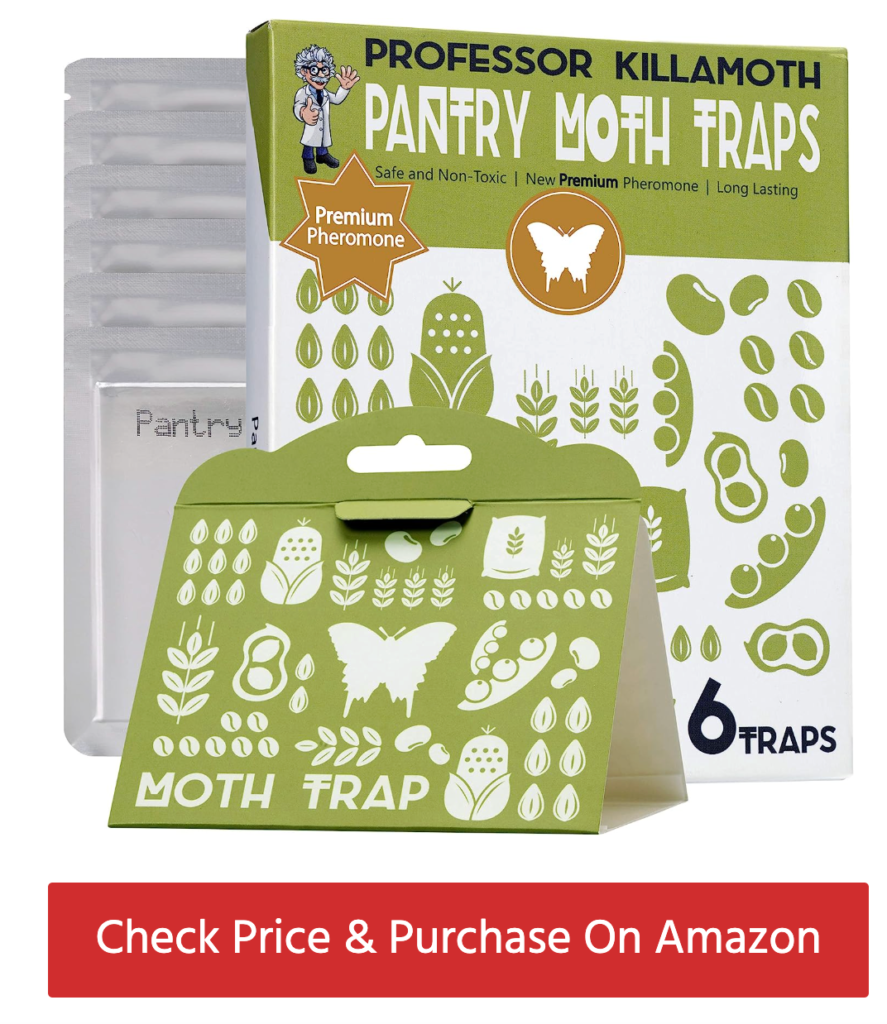
Our pick: Professor Killamoth’s Pantry Moth Traps. No assembly, no mess — just unfold, hang or set, and let the pheromone lure do the work. If you’ve got an active infestation, this is the first thing to put in the pantry, not the last.
2. Inspect and Discard Infested Food
Go through every open bag, box, and container. Look for webbing, larvae, or small moths near the seams and folds of packaging — that’s where they hide. Anything showing signs of activity goes straight into a sealed bag and out to an exterior trash can, not the kitchen bin, so nothing crawls back out.
3. Deep Clean the Pantry
Once the infested items are gone, clean the space itself. Vacuum every shelf, corner, and seam — that’s where eggs and larvae collect, often out of sight behind cans and boxes. Follow with a vinegar-and-water wipe-down to disinfect the shelves and remove any lingering pheromone trails that could attract more moths.
4. Store Everything in Airtight Containers
Bags and boxes aren’t a real barrier — pantry moths chew through cardboard and thin plastic without much trouble. Airtight containers do two things at once: they keep new moths from getting in, and if an infestation does start, it stays contained to a single container instead of spreading across your shelves.
5. Add Natural Repellents
Cedar and lavender are two of the most effective natural moth deterrents, and unlike mothballs, they don’t leave a chemical smell behind on your food or containers. Cedar chips and lavender sachets tucked into pantry shelves, drawers, or storage bins create a scent barrier moths actively avoid — no naphthalene required.
For an extra layer of defense, a few drops of peppermint, eucalyptus, or tea tree oil on a cotton ball does the same job in a pinch.
Keeping It Moth-Free
A pantry moth infestation feels like a losing battle right up until it isn’t. Set pheromone traps to stop reproduction, clear out anything infested, clean the space thoroughly, switch to airtight storage, and layer in natural repellents like cedar and lavender for ongoing protection.
Handle all five, and you’re not just solving today’s infestation — you’re making sure there isn’t a next one.
P.S. — Pantry moths aren’t the only ones that’ll invade your house.
Clothes moths go after wool, cashmere, and anything else with natural fibers, and they hide out in closets and drawers instead of the kitchen. Same idea, different battlefield: These Clothes Moth Traps use the same pheromone-lure approach to catch clothes moths before they lay eggs in your sweaters, and a set of cedar and lavender sachets in your closet or dresser drawers keeps them from moving in in the first place. Additionally Cedar and lavender sachets also help eliminate odors in your closet and smell great too.

If pantry moths taught you anything, it’s that prevention beats another infestation — so don’t wait until you find holes in your favorite sweater to deal with it.